



Data Security and Compliance
Data security, confidentiality, and compliance are critical for every ERPNext implementation. Businesses trust us with sensitive operational, financial, employee, and customer information, and we take that responsibility seriously. Our practices are designed to protect client information, reduce security risks, maintain system reliability, and support long-term business continuity.
Client Data Protection
We follow a multi-layered data protection approach to keep client information secure during implementation, support, and maintenance. Sensitive data is protected using secure encryption during both storage and transmission, and access is restricted by user roles and responsibilities so only authorized individuals can reach production data.
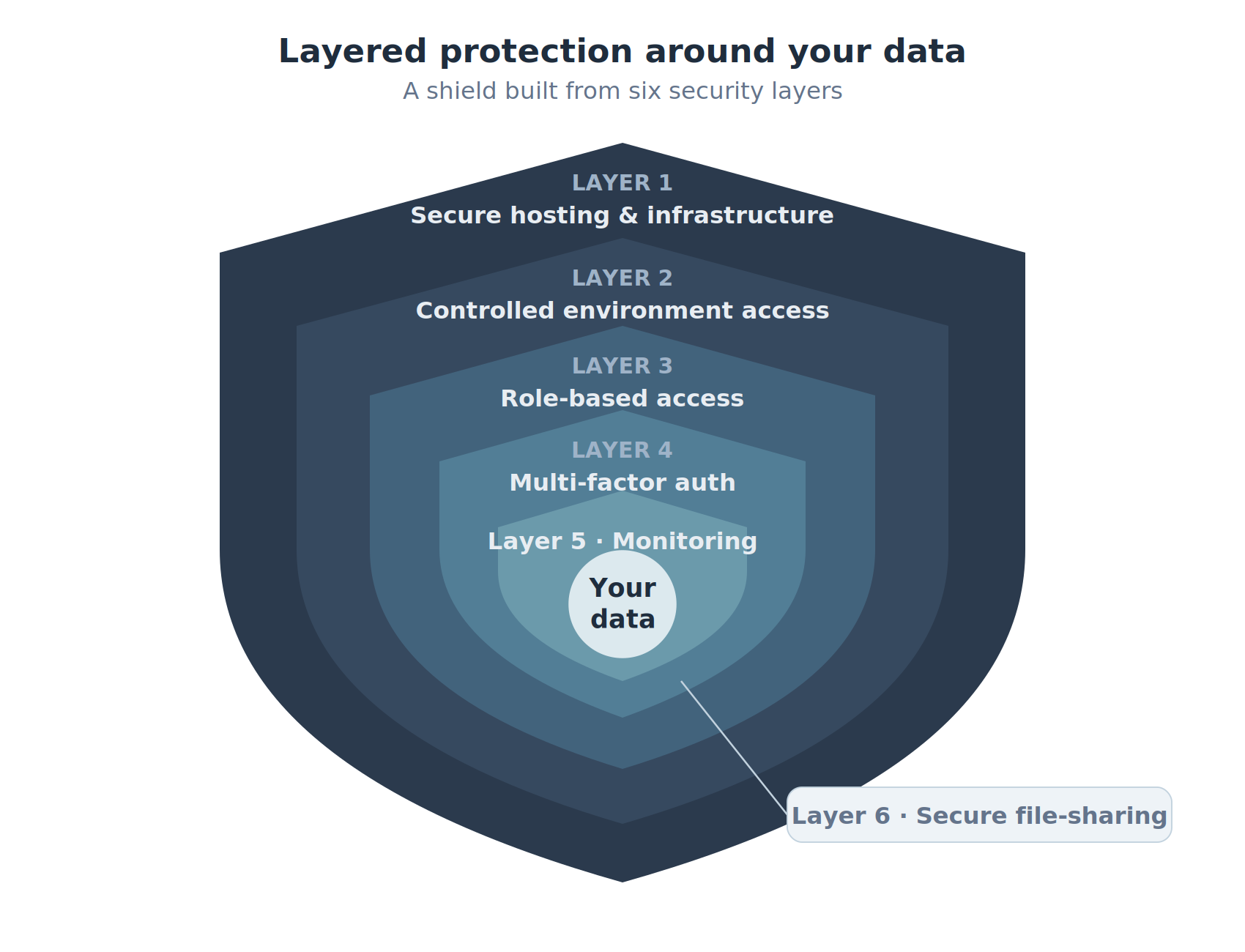
Where required, test or development data may be anonymized to protect sensitive business information during customization and testing. Customers always retain ownership of their ERPNext data, including the ability to request exports, backups, or deletion based on project agreements.
This secure data-handling process helps businesses maintain confidentiality, operational security, and compliance readiness.
Production System Access Control
Access to the live production system is strictly controlled and provided only to authorized personnel.
Depending on project scope, production access may be granted to:
We follow the principle of least-privilege access — users receive only the minimum access required for their role. All production access is monitored and logged for transparency and accountability.
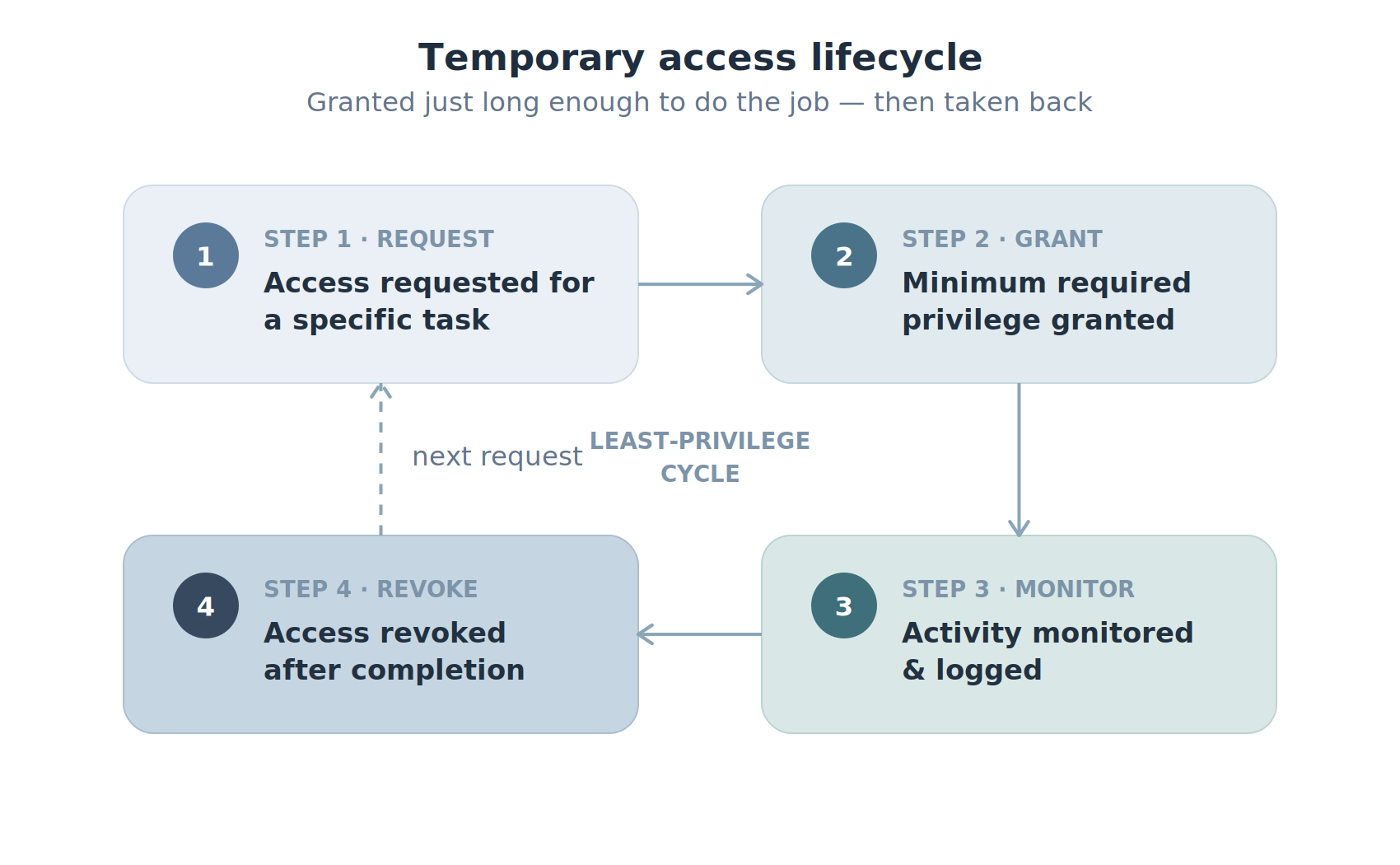
Why it matters: Temporary access for troubleshooting or deployments is provided only when required and revoked once the activity is complete — reducing security risks and better protecting critical business data.
Backup & Disaster Recovery
Regular backups are essential for protecting business continuity and preventing data loss. We follow a structured backup and disaster recovery process:
Backups are stored in secure, geographically separate environments to improve recovery reliability in case of unexpected failures or disasters.
Our retention policy is designed to support operational recovery, compliance requirements, and long-term business data protection.
NDA & Confidentiality Commitment
Confidentiality is a core part of every engagement. We sign Non-Disclosure Agreements (NDAs) and confidentiality agreements with customers to protect the following
- Business information
- ERPNext customizations
- Financial and operational data
- Process documentation
- Technical architecture and workflows
Internal employees, consultants, and external vendors working on projects are also bound by confidentiality obligations and security policies. Where required, we can customize NDA and confidentiality agreements based on industry regulations, regional compliance requirements, or client-specific legal policies.
Why it matters: This confidentiality and secure project-engagement process helps build trust and ensures sensitive business information remains protected.
Security Standards & Compliance
Aligned with the standards your auditors expect. Our practices may align with ISO 27001, GDPR, SOC 2, secure software development, and audit-logging standards — with extra support for regulated industries like healthcare, finance, and payment processing.
We follow industry-standard security and compliance best practices.
Depending on project requirements, compliance practices may align with:
For industries with additional compliance requirements such as healthcare, finance, or payment processing, we can also support compliance-focused implementation practices wherever applicable.
To help businesses operate ERPNext securely while maintaining proper governance, risk management, and compliance readiness.
Our Commitment to Security & Trust
Data security is not a one-time activity; it is an ongoing process integrated into our implementation, support, maintenance, and infrastructure practices. By following secure implementation methodologies, structured access controls, backup policies, and confidentiality practices, we aim to provide customers with a secure, transparent, and dependable ERPNext experience.
Frequently Asked Questions
You do. Customers always retain ownership of their ERPNext data, including the ability to request exports, backups, or deletion based on project agreements.
Through a multi-layered approach: secure hosting, role-based access, multi-factor authentication, activity monitoring and audit logs, secure file-sharing, and controlled environment access — with encryption applied to data both at rest and in transit.
Only authorised personnel: approved client administrators, assigned project managers, ERPNext support engineers, and technical team members for deployment or troubleshooting. We apply least-privilege access, and temporary access is logged and revoked once the task is done.
Daily full backups, hourly incremental backups for critical systems, secure storage, encrypted retention, and periodic verification with restore testing. Backups are kept in secure, geographically separate environments for recovery reliability.
Yes. We sign NDAs and confidentiality agreements covering business information, customizations, financial/operational data, process docs, and technical architecture. Practices may align with ISO 27001, GDPR, SOC 2, secure development, and audit logging, and can be tailored for healthcare, finance, or payment-processing requirements.